
POWERED BY SENOSTAT™
Engineering the Future of Functional Skin Health
For dermotologists and patients seeking a new standard in chronic pigmentation care.
POWERED BY SENOSTAT™ — our proprietary platform targeting cellular senescence to restore the biology healthy skin depends on.
Engineering the Future of Functional Skin Health
For dermotologists and patients seeking a new standard in chronic pigmentation care.
THE PROBLEM
Symptom control is not biological resolution.
Chronic pigmentary disorders often respond to surface-level treatment, yet relapse remains common. The underlying tissue environment that drives dysfunction is rarely addressed.

Persistent source of dysfunction: Cellular Senescence.
Over time, damaged or stressed cells enter a state of permanent arrest known as cellular senescence. As these cells accumulate due to impaired clearance mechanisms, they alter tissue behaviour through sustained secretion of signalling factors known as the Senescence-Associated Secretory Phenotype (SASP).
SASP contributes to:
- Impaired structural integrity
- Pigment regulation disruption
- Loss of regenerative balance
This persistent signalling noise limits treatment durability and contributes to recurrent disease states.
OUR APPROACH
Senostat™ Regulates Dysfunction At Its Source.
Engineered to modulate senescence-associated signalling within the dermal microenvironment, the Senostat™ platform restores the biological conditions required for stable, functional skin.
This enables:
-
Reinforcement of the dermal–epidermal junction
Stabilising the structural barrier compromised by SASP-associated proteases.
-
More balanced melanocyte activity
Attenuating the pro-melanogenic signals that drive chronic pigment overproduction.
-
Improved resilience to relapse
Addressing the senescent signalling environment that conventional therapies do not reach.
A system approach to durable dermatological outcomes

OUR EVIDENCES
The Data Behind The Platform.
In a prospective clinical trial, patients treated with the Senostat™ protocol demonstrated meaningful and durable reductions in melasma severity, with no observed rebound pigmentation up to 3 months post-discontinuation and a favourable adverse event profile. When contextualised against efficacy benchmarks reported in published literature for standard treatments including topical 4% hydroquinone, the outcomes are clinically notable.
In a prospective clinical trial, patients treated with the Senostat™ protocol demonstrated meaningful and durable reductions in melasma severity, with no observed rebound pigmentation up to 3 months post-discontinuation and a favourable adverse event profile.
When contextualised against efficacy benchmarks reported in published literature for standard treatments including topical 4% hydroquinone, the outcomes are clinically notable.


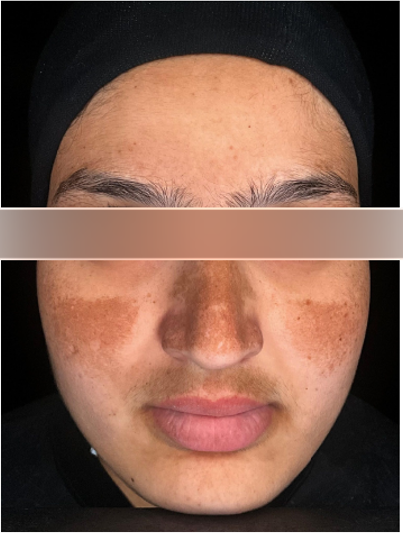
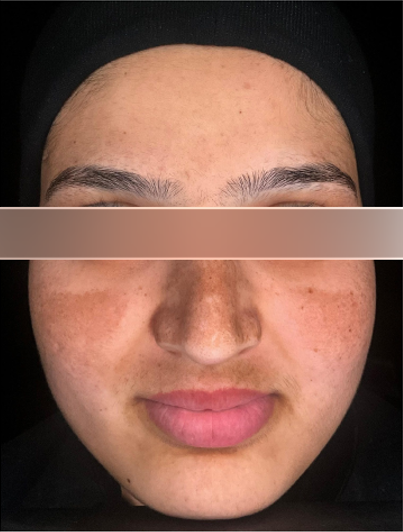


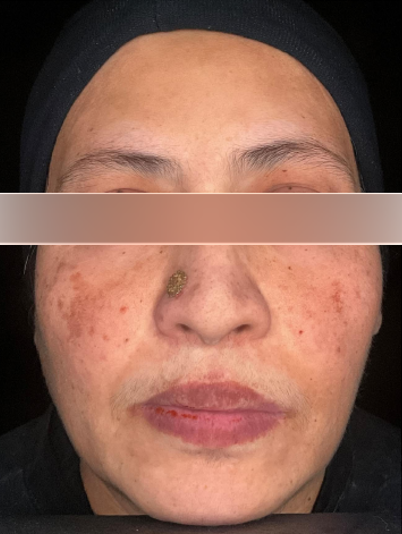
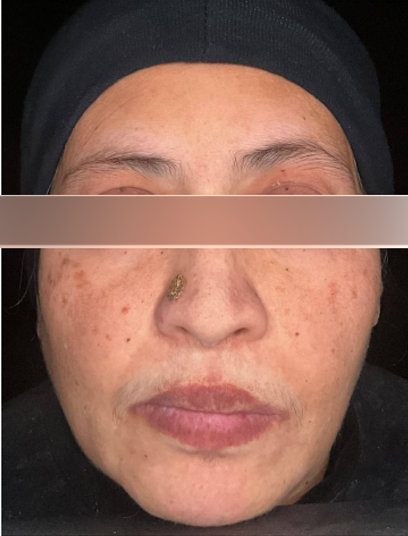
85% of enrolled patients completed the full study protocol. The 15% who did not complete the trial withdrew for personal reasons unrelated to the treatment — including loss to follow-up and relocation — with no protocol-related discontinuations recorded. This retention profile is supported by the tolerability of the quercetin-derived formulation, which avoids the irritation and post-inflammatory hyperpigmentation commonly associated with conventional depigmenting agents.
85% of enrolled patients completed the full study protocol. The 15% who did not complete the trial withdrew for personal reasons unrelated to the treatment — including loss to follow-up and relocation — with no protocol-related discontinuations recorded.
This retention profile is supported by the tolerability of the quercetin-derived formulation, which avoids the irritation and post-inflammatory hyperpigmentation commonly associated with conventional depigmenting agents.
EFFICACY
60%
The regimen demonstrates up to a 60% reduction in melasma severity (mMASI) within 12 weeks. For reference, published data for topical 4% hydroquinone typically report mMASI reductions in the range of [X–Y%] over comparable timeframes.
DURABILITY
3 months
Results are maintained up to 3 months post-discontinuation, with no clinically significant rebound pigmentation observed
PATIENT EXPERIENCE
85%
High levels (85%) of treatment adherence and minimal adverse events reported were reported, consistent with favourable tolerability of the Senostat protocol. No discontinuations were attributed to treatment-related adverse events.
THE REGIMEN
The Chromatic Reset Program: A Synchronised Clinical Regimen.
Senostat™ underpins ASENBE’s Chromatic Reset Program — a structured clinical regimen designed to stabilise tissue conditions, treat visible manifestations, and support long-term functional improvement.
Lasting results depend on improving the biological “soil” , not only targeting visible symptoms.

Lumina Surge
Suppresses upstream melanogenic signalling and attenuates melanosome transfer.
Cell Solace
Addresses oxidative and inflammatory burden in the epidermis and dermis.
Epiturn
Accelerates epidermal turnover to refine tone and texture as the dermal environment stabilises.
PARTNER WITH US
A Protocol Designed For Your Most Resistant Cases.
ASENBE is a B2B clinical partner. We collaborate with dermatologists and research institutions to integrate senescence-focused strategies into clinical protocols for challenging and recurrent pigmentary conditions.
Flexible Integration
Deploy as a standalone protocol or in combination with existing depigmenting agents, depending on case complexity and patient profile.
Tolerability Profile
Designed to minimise irritation and PIH risk — a meaningful consideration in higher-phototype populations.
Clinician Resources
Access to SASP signalling maps, mechanistic whitepapers, clinical outcome data, and ongoing research updates.
Join a growing network of dermatological clinics and research centres applying Senostat™ to redefine outcomes in chronic pigmentary disorders.
PATIENT STORIES
In Their Own Words
These are patients treated under physician supervision using the Chromatic Reset Program
Outcomes shown are consistent with results observed in our prospective clinical study. Individual results may vary.
PUBLICATIONS AND CONFERENCES
Grounded in Published Science
ASENBE’s platform is built on peer-reviewed senescence research and validated through prospective clinical investigation.
PUBLICATION
Flexible Integration
A manuscript reporting the clinical outcomes of the Senostat protocol is currently in preparation for submission to a peer-reviewed dermatological journal.
CONFERENCE
7th PigmentoryCon Conference 2026
Invited Podium Presentation – May 2, 2026. Abstract to be made available in conference proceedings.
CONFERENCE
Bangalore Dermotological Society 2026
Invited Podium Presentation – April 19, 2026.
ABOUT ASENBE
Built By Scientists.
Designed For Physicians.
ASENBE was founded to close the gap between senescence biology and clinical dermatology — engineering solutions that act on the cellular environment, not just its symptoms.
Our mission is to optimise functional skin healthspan by targeting tissue dysfunction driven by cellular senescence. The Senostat™ platform is the first expression of that mission — and the foundation for everything we are building next.
Preventive. Regenerative. Biologically Intelligent.
Frequently Asked Questions
Contact Us
Interested in integrating Senostat into your clinical practice? Get in touch.
Envisioning a future where beauty science transcends skincare, a world where better longevity and healthspan are easily accessible
CONNECT
All right reserved | Copyright @ Asenbe 2026